[bars]
Common Names: Plum-headed Parakeet, Plum-head Parakeet
Scientific Name: Psittacula cyanocephala
Origin: Pakistan, India, Sri Lanka, Bangladesh
Relative Size: 13 inches
Weight: 70-80 grams
Average Lifespan: 20-30 years
Egg Clutch: 4-6 white eggs
Incubation: 23 days
Talking Ability: Excellent
GENERAL INFORMATION ABOUT PLUM-HEADED PARAKEETS
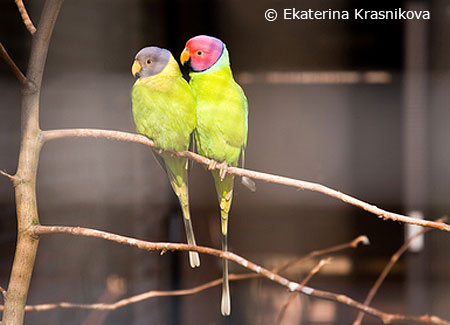
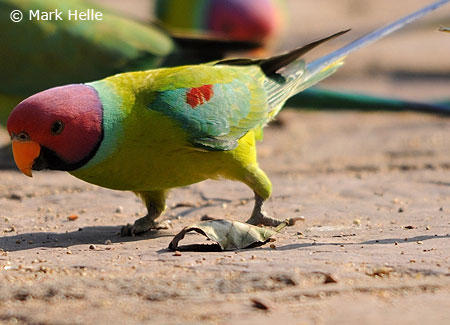
These parrots are sexually dimorphic which means the males and females look different when mature; therefore, they can be easily identified. The males will showcase a bright red and purple plum colored head, a black ring, and shades of blue on the neck. The female has a dull appearance as compared to the male who has a light purple head and yellow neck. Their eyes are black and when pinned, the yellow is clearly seen. Both are stunning specimens and highly sought after.
[ads]
All Plum-headed Parakeets have a lime green body and a blue long tail tipped with white. Their wings resemble the Alexandrine Parakeet. The Plum-headed Parakeet wings have maroon patches and dark hues of green and blue. Their tails make up a large part of their size, and when in flight yellow feathers can be seen under the tail and wing feathers.
These parrots are similar in size to their cousins, the African Ringneck and range between 13 and 14 inches. It is important to note that their cousins, the Blossom-headed Parakeets, look very similar; however, they are two different species.
PLUM-HEADED PARAKEETS IN THE WILD
The Plum Headed Parakeet is native to India. These parrots thrive on blossoms, fruits, and seeds. It is not uncommon for them to follow seasonal fruits and many depend on well-known feeding spots throughout the year. These birds are at home in open woodlands and forests. More recently, locals have been providing feeding stations as they are highly enjoyed by the public and tourists.
Unlike other Asiatic parrots, Plum-headed Parakeets live throughout India and are not considered threatened; however, they are declining due to habit destruction and capture. India has just recently made it illegal to own these native birds; however, they can still be found within the population.
In the wild, these birds thrive in large flocks. Their calls can be heard during the early morning hours and just before sunset. Their shrill calls echo across the sky and these parrots make no effort to hide their arrival. Their flocks can consist of many birds or be segmented into smaller groups ranging between five and ten parrots. Their swift and stealthy movement makes them difficult to observe and many can be seen darting in and out of tight places.
During the breeding season, February through May and again in August through September, these parrots branch off into pairs. Each pair will find a nesting cavity in a tree or a building nook, or something similar where they will raise their young.
PLUM-HEADED PARAKEETS AS PETS
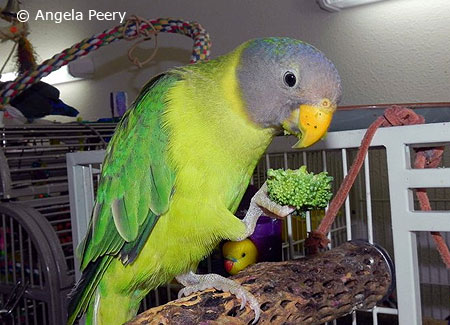
These parrots make marvelous pets. They are very friendly and best purchased after weaning. Most owners find these parrots to have enjoyable personalities. They are very stable but tend to shy away from strangers. When introducing your parrot to new people, it is best for them to be gradually introduced and coaxed with treats.
These birds are content being perched on their owner’s shoulder all day long or just lounging around while the owner reads a book, uses the computer, or watches television. It is best to avoid wearing shiny accessories while holding your parrot as jewelry or watches will easily become chew toys and could be damaged.
Setting rules and guidelines from the beginning is important because like most Asiatic parrots, these birds will test limits. Nibbling should not be encouraged as it can quickly lead to biting. If the bird should bite, the owner needs to ignore it as with all unwanted behaviors. Only when the parrot is doing what it is supposed to do should it be given treats to enforce the behavior.
These parrots are gifted when it comes to talking. The males seem to be better at talking; however, the females can become quite skilled as well with a little coaching. The bird’s voice is clear and loud for its little size. Most start talking around six to eight months but others don’t begin until almost a year. Before talking is mastered, the bird will go through a babbling stage as it practices words. During this stage the owner should speak excitedly and encourage this gibberish as it will lead to talking.
These birds should not be purchased solely for their talking ability due to the fact that they may never say a word and the owner may be disappointed. Unfortunately, many people buy these parrots in hopes they will be great talkers. Instead of buying a parrot for its talking ability, the owner should focus more on the traits and the bird’s personality. Talking ability should be considered as an extra perk.
BREEDING YOUR PLUM-HEADED PARAKEET
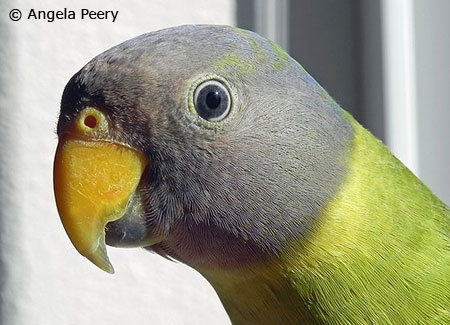
Breeding these birds is not difficult but they tend to require a bit more privacy like their cousins, the African Ringnecks. These birds breed best in large suspended cages above eye level or larger aviaries because it allows them privacy and room. Breeding the birds should be done in pairs and colony breeding should be avoided unless ample space is provided.
Just before the breeding season begins, the female Plum-headed Parakeet will spend a great deal of time inside her nesting box. Usually, she will chew the bedding or try to clean the nesting box to deposit her eggs. Most breeders will use a small layer of pine shaving on the bottom to ensure the eggs do not roll around or break. Once the female is ready to lay eggs, she will produce one egg every other day until her clutch is complete. This clutch can range from four to six white eggs. She will incubate the eggs for 23 days.
Just before hatching, the babies will make a small hole from inside the egg. This small hole is called a pip hole. It is used so the chick can breathe and also allows the remaining yolk to be absorbed into the chick’s body.
When the babies hatch, the mother might decide to eat the egg shells or may just discard them. She will feed the baby birds for several weeks until they fledge (when babies leave the nest) which takes place around 7-8 weeks.
It’s important to note that male and female juveniles will look similar at the beginning. It’s only after the first molt that the males will start to attain their plum-headed cap.
If the babies are pulled for hand feeding, they should all be pulled at once and also only when the oldest chick is 15 days old. Removing only one chick from the nest could cause the mother great distress; thereby, resulting in her abandoning her nest. For this reason, it’s best that the babies be removed at the same time.
HAND FEEDING & WEANING A BABY PLUM-HEADED PARAKEET
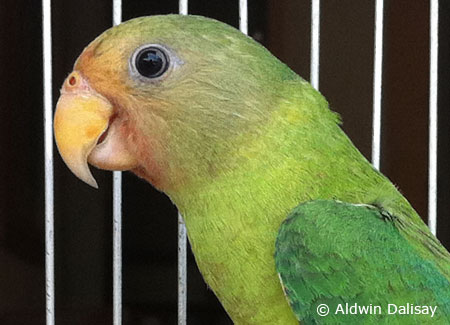
Before a breeder hand feeds a baby parrot with a commercial formula, the breeder should ensure that the initial food given to a bird by its mother has completely digested inside the baby’s crop. A change in food can cause diarrhea or a sour crop to the baby bird. A breeder needs to be setup to handle this type of feeding as incorrect feeding methods can cause the bird to get sick or even die.
If only one chick is available for hand feeding, placing a small stuffed animal inside its enclosure to snuggle with will help prevent the baby from feeling lonely.
The weaning process should never be rushed. Each chick will wean on its own time. Starving a chick to initiate the weaning process is unethical and stressful for the bird. Using warm foods such as pumpkin, squash, carrots, or peas work wonders. These foods should be placed into the weaning enclosure daily as it exposes the chicks to new foods.
When the babies are ready to wean, most will start to refuse hand feedings. This is normal and the babies will lose a bit of weight. To offshoot this, feed more frequently throughout the day as well. Babies that are feed more often tend to wean quicker because they don’t spend their time begging or crying for food.
PLUM-HEADED PARAKEET CAGE
The cage of the parrot needs to be about the size of a cockatiel’s cage. These birds are very active and acrobatic. Many owners will enjoy watching their parrot swing from toys, hang upside down, or climb around. For this reason, the cage should be large enough that the bird can turn around, flap its wings, and swing without touching the cage bars.
The best cages are those that have been powder coated due to the fact they last much longer and are easier to clean. The spacing of the bars should be no larger than one-half inch. If the spacing is too large, the birds can squeeze through or get hurt trying to escape.
Perches and toys need to be arranged away from food and water bowls. If they are too close, droppings can contaminate food and water.
The bottom of the cage should have a grill installed to ensure the parrot cannot have access to its droppings or spilled food. The grill should be easy to remove and wiped down daily.
FEEDING YOUR PLUM-HEADED PARAKEET
Feeding your Plum-heading Parakeet is easy and fun. They should have a diet of seeds and pellets along with fresh fruits and vegetables. As small as these parrots are, they enjoy holding food with their hands so it is best to cut food into small cubes. Protein items such as hard boiled egg, small chunks of chicken, or turkey can be given sparingly. Just be sure to remove any perishable food items before they spoil.
If these birds are not exposed to new foods these birds can become picky eaters. If this happens, the owner should introduce new foods daily until the parrot starts eating what is placed into the cage. Never just change food without giving the parrot time to adjust as most will starve to death.
If you feed your parrot a diet of pellets, seeds, fruits, and vegetables your bird can live between 20 to 30 years.
[ads]