[bars]
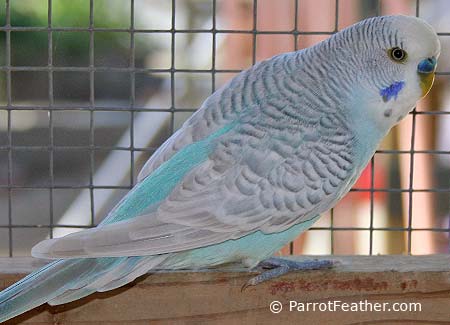
Having a healthy Budgie means having adequate living conditions, proper nutrition, exercise, and mental stimulation. A Parakeet’s cage should be large enough to house himself, his toys, and his food and water bowls. The Parakeet should be able to turn around freely, flap his wings, hang upside down, and jump from perch to perch freely. Rather then give specifications to how large a cage should be, follow that rule of thumb and you can’t go wrong. You should also purchase a cage as large as your budget can afford. Not only should the cage be spacious, but also easy to clean. Keeping the cage clean is important and necessary for optimal health.
[ads]
A proper cage should have trays that can easily be removed. This will make daily cleaning quick and less of a hassle. Daily cleaning gives your pet a safe, clean, and healthy environment. The cage should have a grill to prevent the parrot from walking or touching his droppings. Like the tray, the grill should be removable so it can be wiped down. The cage needs to be washed weekly in a bleach solution of 1 part bleach to 10 parts water. After being washed down with this solution, the cage should be washed thoroughly with water again and set aside to completely dry. The perches should also be washed and scrubbed with the same solution, then washed again with water. Drying the perches properly is important because wood harbors bacteria much more readily then plastic and metal. A good cage will also have easy access to food and water dishes. The dishes should be placed away from perches so droppings will not fall into the bowls.
Budgie Diet
Your Parakeet’s diet needs to be varied. Seeds are not solely the diet of this parrot. Like its larger cousins, Parakeets are omnivorous. Their diet consists of greens, protein, and grass seeds. This means providing your parrot with a proper diet takes some work. Grading carrots, cutting spinach, or providing slices of fruit are required in their diet. Pellets and seeds should be used as the base of their diet, but fruits and vegetables must be included. Small cubes of cooked chicken or shredded turkey are optimal for protein. Just be sure any meat is not kept longer then an hour inside the cage for it can quickly spoil. Eggs are also a great source of protein.
Budgies and Exercise
Along with having a diet that’s rich in nutrients, Parakeets need plenty of exercise to maintain their health. Letting your Parakeet walk outside his cage is encouraged, but caution should be used. A small Parakeet can easily be stepped on. Having a play gym for the bird is ideal and you should train your parrot to spend hours there. If the Parakeet decides to wonder or fly off, simply pick the Parakeet up and place him back on his stand. This can get repetitive, but the bird will soon learn his boundaries and stay on the stand.
Budgie Socializing
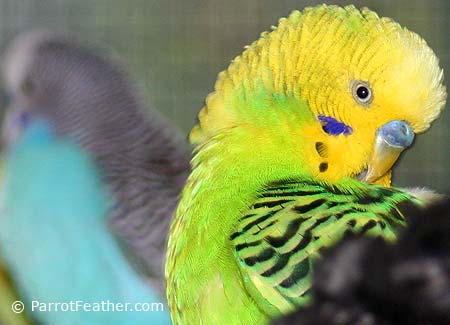
Exercise is important, but ensuring the bird feels like part of the flock is just as important. Parrots who do not feel included in the family dynamics tend to develop psychological problems. A parrot left alone will become bored and will develop mental problems. These are social creatures that need and thrive on human interaction, especially if they have no other birds to interact with. Some will resort to picking and mutilating themselves. Parakeets should be held and interacted with on a daily basis. All members of the family should take part in holding, playing, feeding, or some type of daily activity with the bird. This helps your Parakeet become accustomed to everyone in the family, rather than bonding to just one person.
A well socialized bird will not scream as much, bite friends and family, or get scared when new people come around. This does not mean a well socialized bird will not bite or scream, but it is less likely to happen under these conditions.
To help your bird get use to new people allow the guest to offer your little bird a treat or toy. This will help lessen any fears the bird may have. Do not be discouraged if your bird does not want to go to the guest at first. It takes time, patience, and kindness. Soon curiosity and treats will win him over
Remember, frequent interaction with your bird is a must; you are their only mental stimulation, aside from their toys. This does not mean that if you leave your bird in his cage for a day he will go crazy, but if you want the most out of your pet’s personality, daily interaction is crucial.
Remember, frequent interaction with your bird is a must; you are their only mental stimulation, aside from their toys. This does not mean that if you leave your bird in his cage for a day he will go crazy, but if you want the most out of your pet’s personality, daily interaction is crucial.
[ads]


