
[bars]
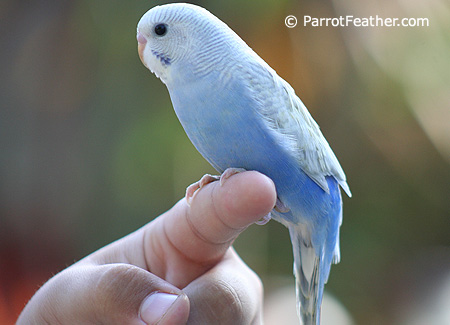
Before the taming process begins, the owner should clip the wings of their budgie as this makes the bird more dependent upon their new owners. If a budgie is clipped it is also less likely to hurt itself by flying into a glass widow or mirror. Once the budgie has been tamed, the owner then may wish to let the wings grow out again.
If a budgie is older, the owner should be more patient as it might take a bit longer to tame the parrot. It is important the owner also know that taming an older budgie is possible but it takes a bit more work.
Let Your Budgie Settle in First
If you have purchased a parakeet it can be exciting to begin the process of taming. Most people feel anxious and wish to hold their parakeet immediately. This should not be done. A parakeet that is new needs time to settle in before you begin the process of taming. A few days will help ease the stress of being removed from his old location. For the time being, just be sure your parakeet is eating, drinking, and is alert. Once a few days have passed, and your bird has settled in, the taming process can begin.
[ads]
When taming your parakeet, it is important to gain the birds trust. Start by talking to the bird. A good way to begin this process is reading or singing nursery rhymes in a soothing voice. A gentle voice will help ease your parakeet’s nervousness. He will soon understand you are not going to harm him. During this process, direct eye contact should be avoided. parakeets can pick up our body language easily, so staying calm is the key.
At first your parakeet may flutter inside his cage when you enter the room. If this happens, stop approaching the cage and continue your soothing talks. Never back away or leave the room. Take a chair and sit across the room. Speak to the bird while sitting across the room. Once the bird is clam and accepting of your presence, move the chair closer. Repeat this process until you can get close to the cage without the bird making a fuss. This process can take hours or weeks. Just be sure to keep things calm and don’t speed them up until your bird is comfortable with the change. Let the parakeet set the pace.
Though you are still earning your parrot’s trust, you still have to deal with changing the seed trays, food bowls, and cleaning. This should be done; however, continue to avoid eye contact and move slowly. Do not try to remove or chase the parakeet with your hands during daily chores.
Gaining the Budgie’s Trust
If the cage can be approached without the parakeet being startled, start to offer him treats. Drop a small morsel into his food bowl. Parakeets enjoy spray millet and it’s irresistible to them. Tear a cluster of seeds off the branch and slowly place it into the food bowls. Try to reward with treats every time you enter the room. The parakeet will start to look forward to your presence and start to associate you with the treats. Birds enjoy eating and most can be tamed through food.
Once you’re sure the bird is eating your treats, start coaxing him to eat from your hands. This step takes lots of patience. Start by gently opening his cage doors and slowly putting your hand inside the cage. Most parakeets flutter. Do not jet your hand back or pull away, keep your hand still and talk soothingly. This step my take a few days or weeks, just be patient. When the parakeet shows no fear of your hand and can eat from it, start working on stepping up inside the cage.
Working on Step Ups with Your Budgie
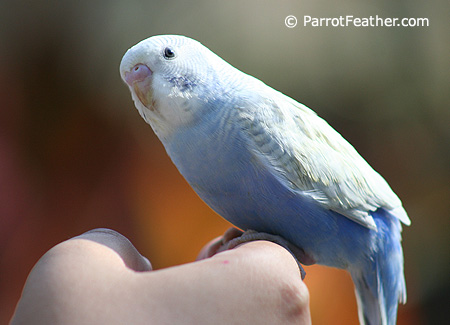
What is stepping up? Stepping up is a command used by pet owners to ensure their parrot steps up on their finger. Your parakeet needs to know this command for easy retrieval. It should be the first rule taught to the parrot.
Teaching your parakeet step ups inside his cage needs to be done with your fingers or a dowel (a perch). If you have a fear of being bitten, use a dowel otherwise use your fingers. Gloves are not acceptable and will startle the parakeet.
Gently place your finger or dowel below the breast line and push up. You’ll find that the parakeet will usually hop on the bars. Gently take your fingers and try to persuade him to step up on your fingers while he is on the bars. If the parakeet flaps around his cage, do not pull your hand out, just stop moving it. After the parakeet has settled down, continue placing your finger under his breast and gently push up. It might take a few tries but eventually he will understand. Continue this exercise until the parakeet stands on your finger. Once the parakeet is confident enough to stand on your finger, try to slowly remove him from his cage.
Once the bird is removed from the cage, gently take him into a room he is not familiar with. A parakeet that is removed from a familiar environment will be much easier to work with. The cage should not be in sight. A bathroom or a small room will suffice. Whatever room you select, ensure it’s quiet and safe. For example, taking your bird into the bathroom would mean making sure the toilet lid is closed, or in a bedroom, it would mean blocking entrances under dressers and beds. This assures the bird cannot be lost or hide.
In this secured quiet room, start to gently pet and talk to the bird. Work on step ups. At first the bird will try to avoid any touching, do not despair, the parakeet needs to understand your intentions. This should to be done a few times a day. Be sure not to end on a bad note. If you place the bird back into his cage during a panic struggle, the bird will start to associate that him struggling with you gets him away from you and back in his cage. Only place the bird back into his cage once he is calm. Never overdo anything. If you feel you’re pushing the bird too much, gently return the bird back to his cage.
Always find treats that your bird enjoys. This will reinforce your relationship. Once the parakeet starts to accept you you’ll have many years of enjoyment. Remember, a parakeet can live 15 years or more. Remember to always be patient and to never rush things. Once you establish a strong bond your pet budgie will almost always seek your attention.
[ads]


