
[bars]
Standing on one Foot
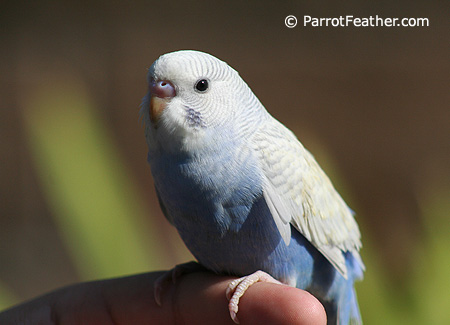
When a budgie is relaxed it is usually quiet, has an appearance of slightly ruffled feathers, and perches on one leg only while tucking the other leg underneath its body. This is normal budgie behavior and the owner need not worry. The bird might stay like this for several hours and rotate its feet periodically to ensure each foot gets a rest. Most budgies will exhibit this behavior before they are sleepy as it’s relaxing to them. This behavior can be expected during noontime and bedtime.
[ads]
If a room is busy and there is a lot of activity within the room, the budgie will not exhibit this relaxed-type behavior but will most likely try to engage with people by chirping and singing. This is typical flock behavior. If, however, it is quiet and there is soft music playing, the budgie might start to get relaxed. Playing music and making the room quiet is a good way to begin settling your bird down. These birds are very responsive to their environment and often their environment dictates their actions.
It is important the owner provide many perches with different diameters for the bird. In the wild, these birds perch on different size branches and this helps to exercise their feet. Different sized perches can be purchased at any pet store at reasonable prices. If dowels cannot be purchased, the owner many want to go outside and cut branches from a tree to ensure the budgie is getting a variety of perches. It is important the owner do some research before any branch is used to ensure it is not toxic to the parrot. Once cleaned, the clipped branches can be disinfected and placed into the bird’s cage. Some safe tree branches that can be used for your budgie are: Hackberry, Bibiscus, Almond, Pecan, Birch, Apple, and Pear trees to name a few.
If the owner believes the budgie is ill, immediate action must be taken as the bird needs to get to an avian veterinarian. Symptoms of an ill budgie are ruffled feathers, a runny nose, tail bobbing, wheezing, and excessive diarrhea. It also important to note that a budgie that is deathly ill will keep its feathers ruffled as it is trying to keep itself warm. If the bird must wait to see a vet, the owner should use a heating lap, incubator, or a brooder to keep the bird warm until the bird can be seen.
Other Common Budgie Questions
Below are common questions many budgie owners ask. Simply click on one of the questions below for more information. If you cannot find an answer to your question here, please post it on our parrot forum under the budgie section or head over to our main budgie area.